
Start with the tools you'll run
The size of the wiring depends on what you plug in, and especially on what runs at the same time. A table saw, a dust collector, and a shop heater running together need more than a few lights and a battery charger. List the big tools, such as the welder and the compressor, plus any heater, car lift, or RV plug you're planning. The nameplate on each tool lists its voltage and amps, and a photo of each nameplate tells us most of what we need.
Getting power out to a detached building
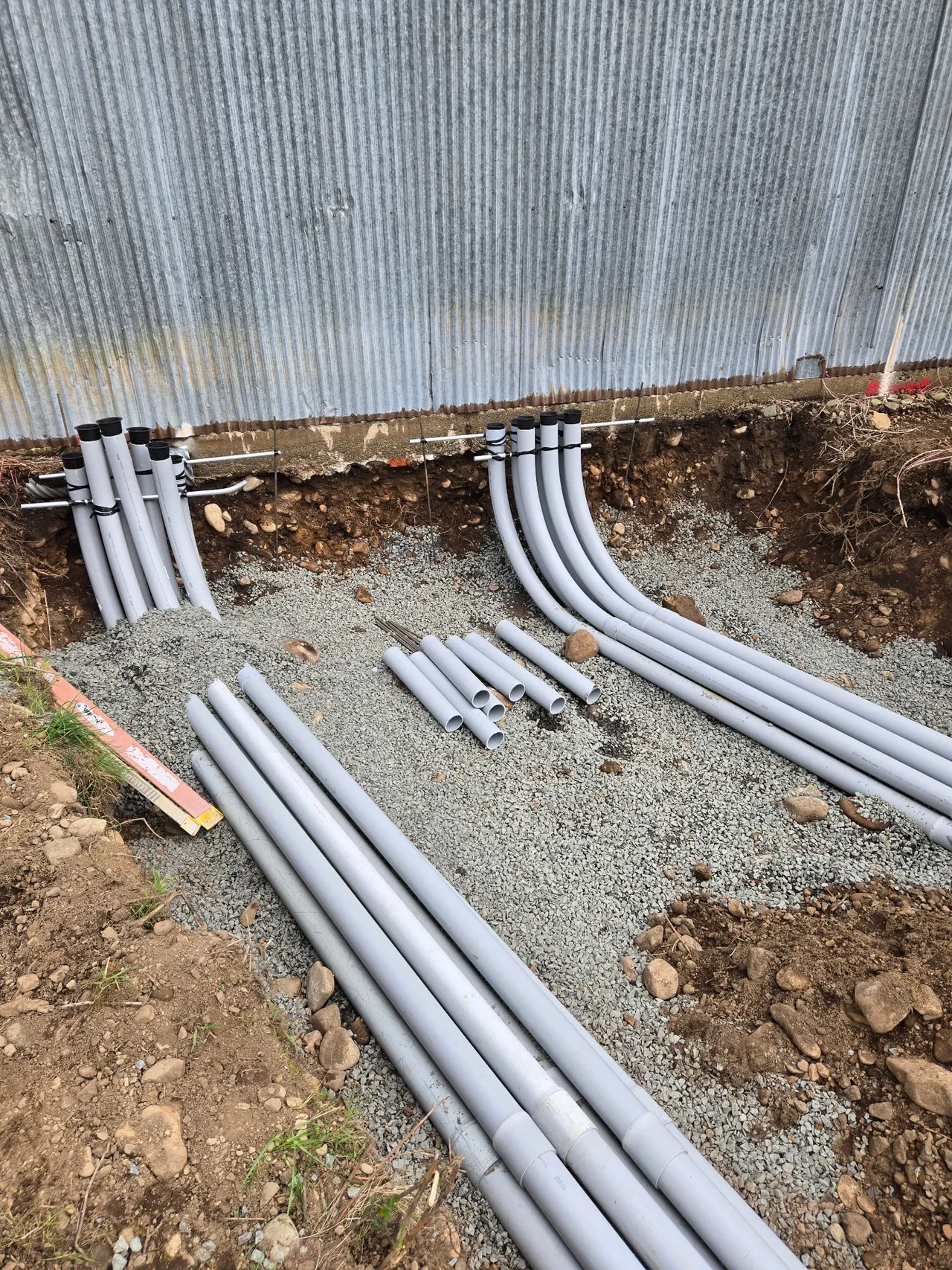
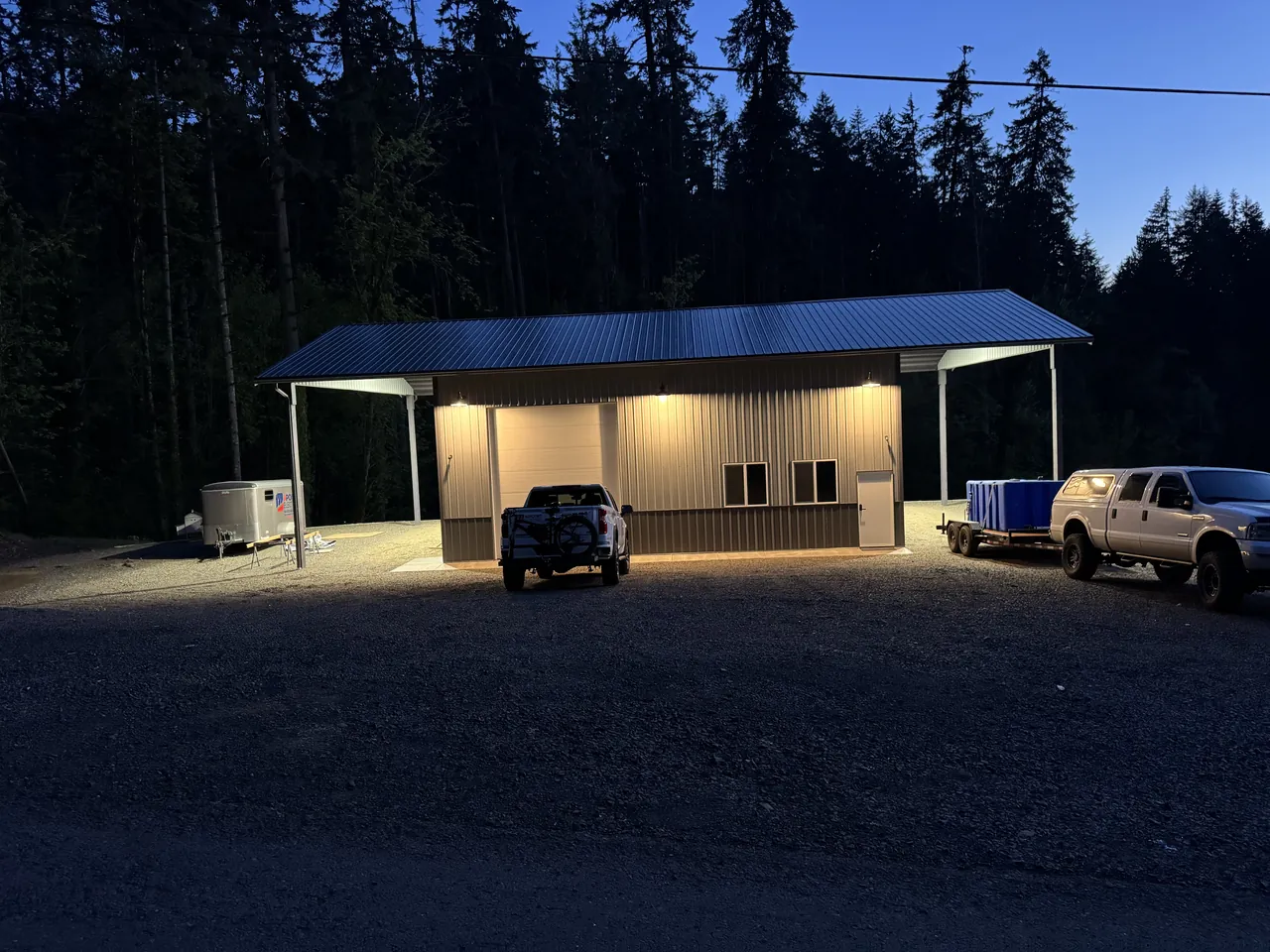
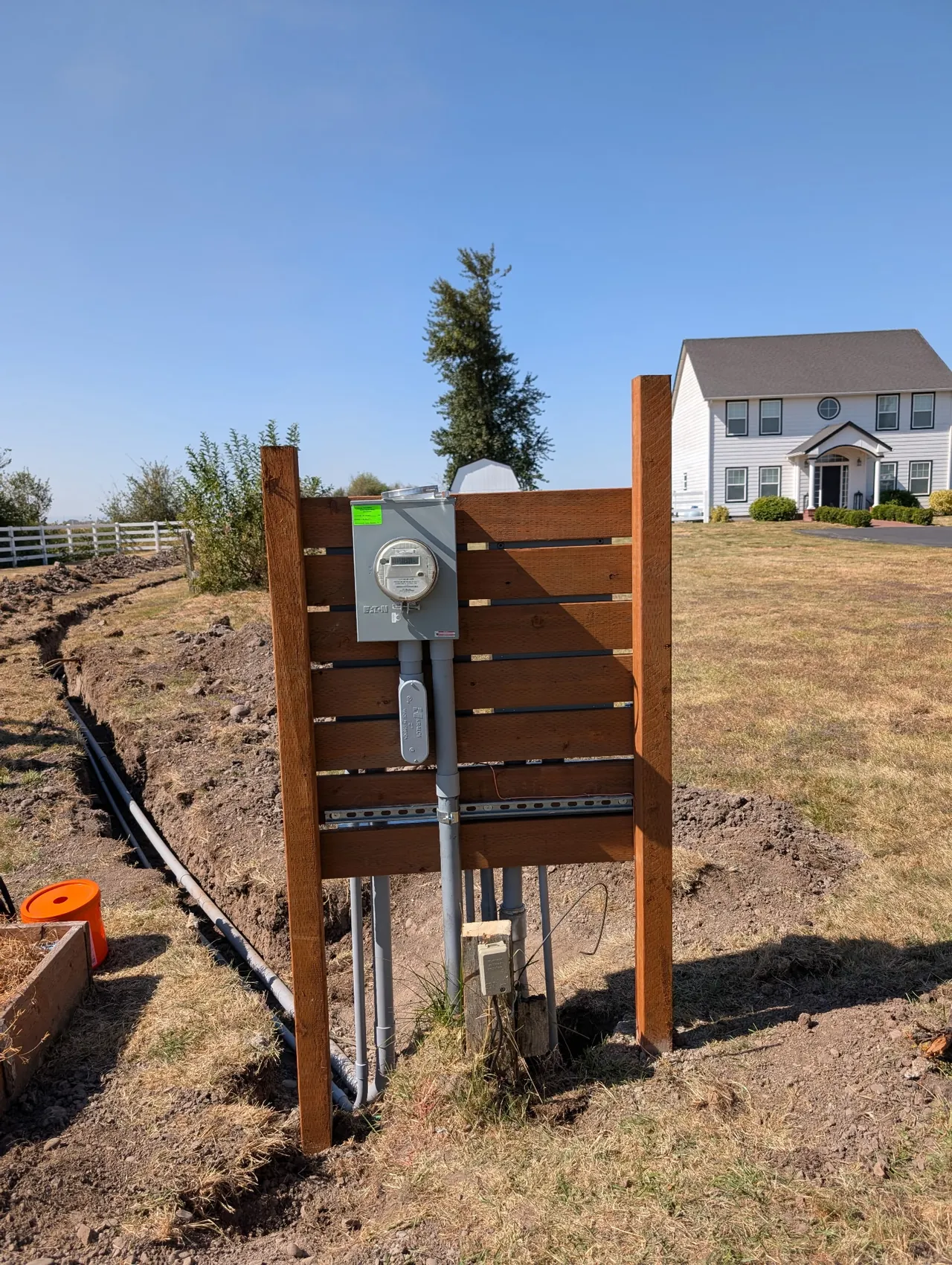
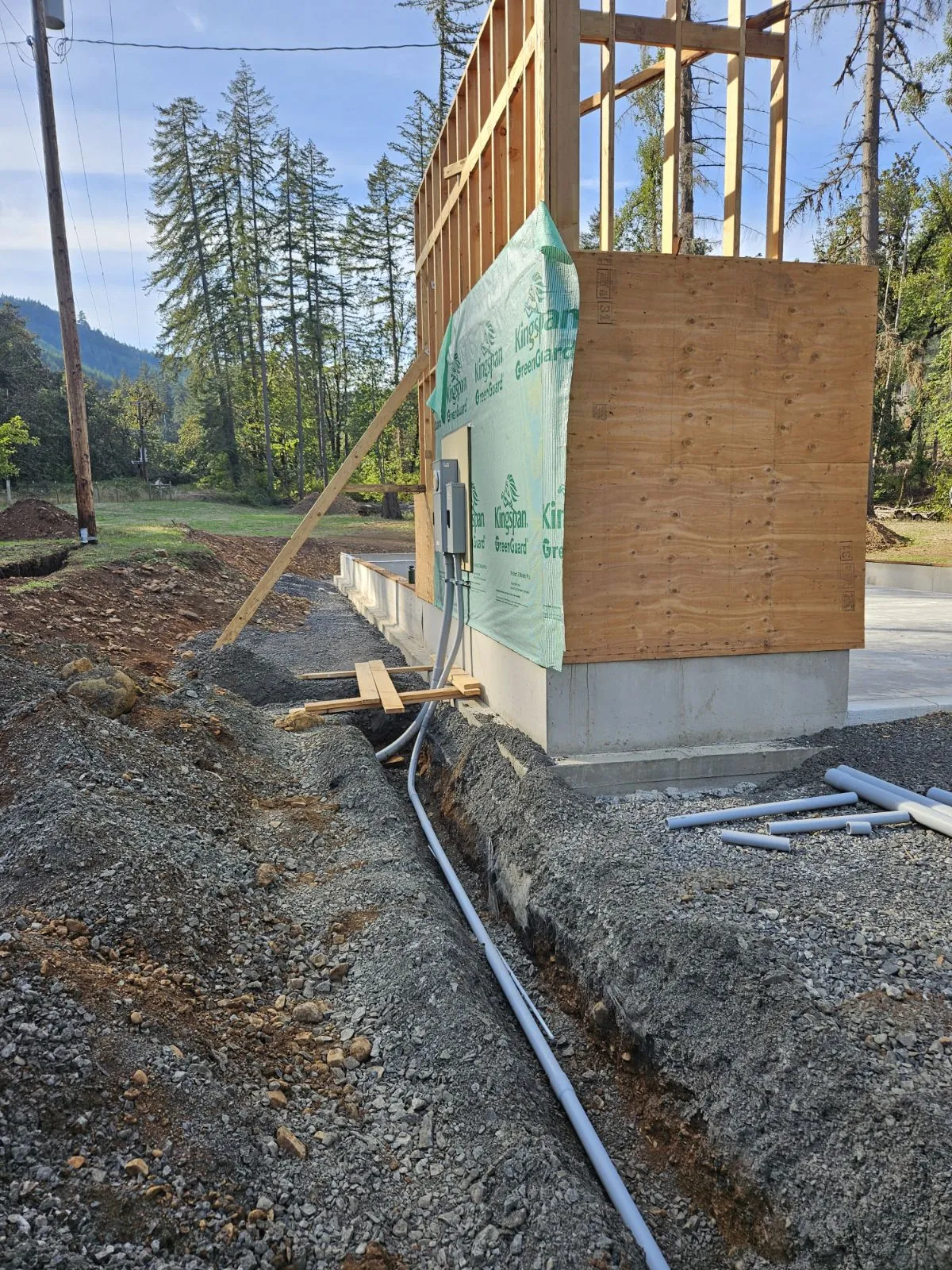
A detached shop or barn gets its power from a wire run out from the house panel, or sometimes from a separate service from the utility. That wire usually goes underground in a trench, and its size depends on the distance and how much power the building needs. A shop with several big tools usually gets its own small panel inside the building, so you can add circuits later without digging another trench. For a long run on a rural property, we'll talk through whether a separate meter from the utility makes more sense.
Attached garages
An attached garage is usually simpler because the house panel is close. Jobs here range from more outlets and brighter lights to a dedicated 240-volt circuit for an EV charger or a welder. Sometimes the panel itself needs moving or replacing first. Jesse and Ben handled one of those:
I wanted a new electrical panel installed in my garage, which turned out to be a challenging task. From Jesse's visit to scope the job out and bid on it, to Ben's professionalism in getting the job done, I could not be happier with this company. For expertise at a reasonable price, these are the folks you want to hire. I give them my highest recommendation.
Sheds and small outbuildings
A shed often needs only a light, a couple of outlets, and a switch by the door. Nick and the team wired one for Kim, who wrote:
Nick and team did a great job wiring our shed. Communication was excellent, follow up was terrific. Highly recommend 4 Point Electric!
Plan the wiring before the walls go up
If the building is still going up, call before the insulation and the inside walls go on. Running wire through open framing is quicker, and it's the moment to decide where the benches, the big tools, and the lights will go.