
Matching the outlet to the plug
240-volt outlets come in several shapes, and each one only fits its matching plug. A dryer and a range use different outlets, and newer ones have four prongs where older homes have three. That's why we ask for the appliance's model or a photo of its plug before the visit. The circuit behind it, the wire size, and the breaker, is sized to the amps on the appliance's nameplate.
RV hookups at home
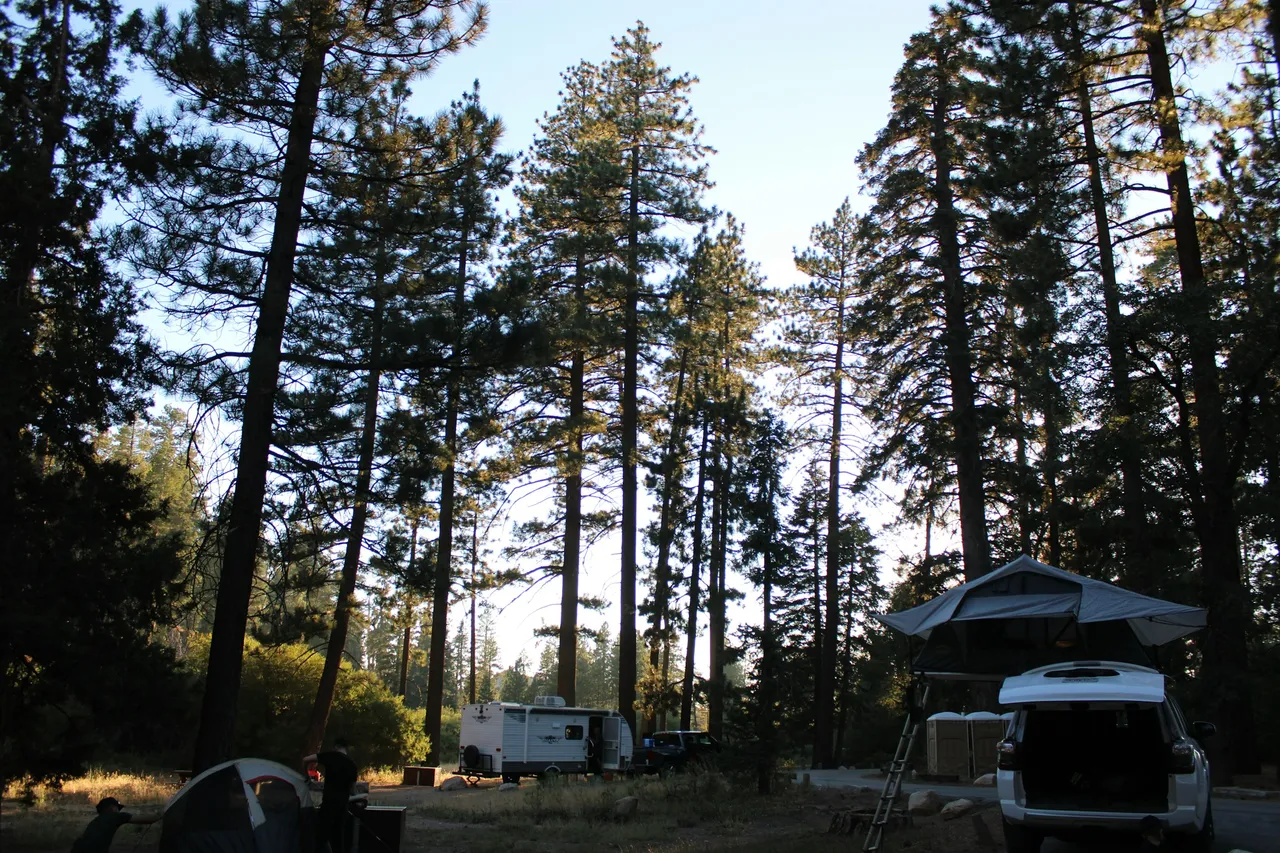
RVs plug in with either a 30 amp cord or a 50 amp cord, and the two use different outlets and different voltages. A 30 amp RV outlet is 120 volts; a 50 amp RV outlet is 120/240 volts. Plugging an RV into the wrong kind of outlet, or into a dryer outlet with an adapter, can damage the RV's electrical system. We install a weatherproof RV outlet on a post or the side of the house, close to where you park, on its own circuit from the panel. If more than one kind of RV visits, an RV power pedestal puts 50, 30, and 20 amp outlets in one weatherproof box. Melissa B. had us set up an RV electrical hook-up along with a panel replacement and a generator hookup at her house.
Does my panel have room for a 240-volt circuit?
A 240-volt circuit takes two spaces in the breaker box and a large share of its capacity. We check both before quoting. If you're adding several big appliances at once, like a range, a car charger, and a hot tub, we'll add up the total and tell you whether the panel or the service needs to grow with it. See panel upgrades and service upgrades.
Shop tools and welders
For a welder or compressor in a detached shop, the outlet can run from the house on its own circuit, or from a small panel in the shop if you're wiring the whole building. See shop wiring.