
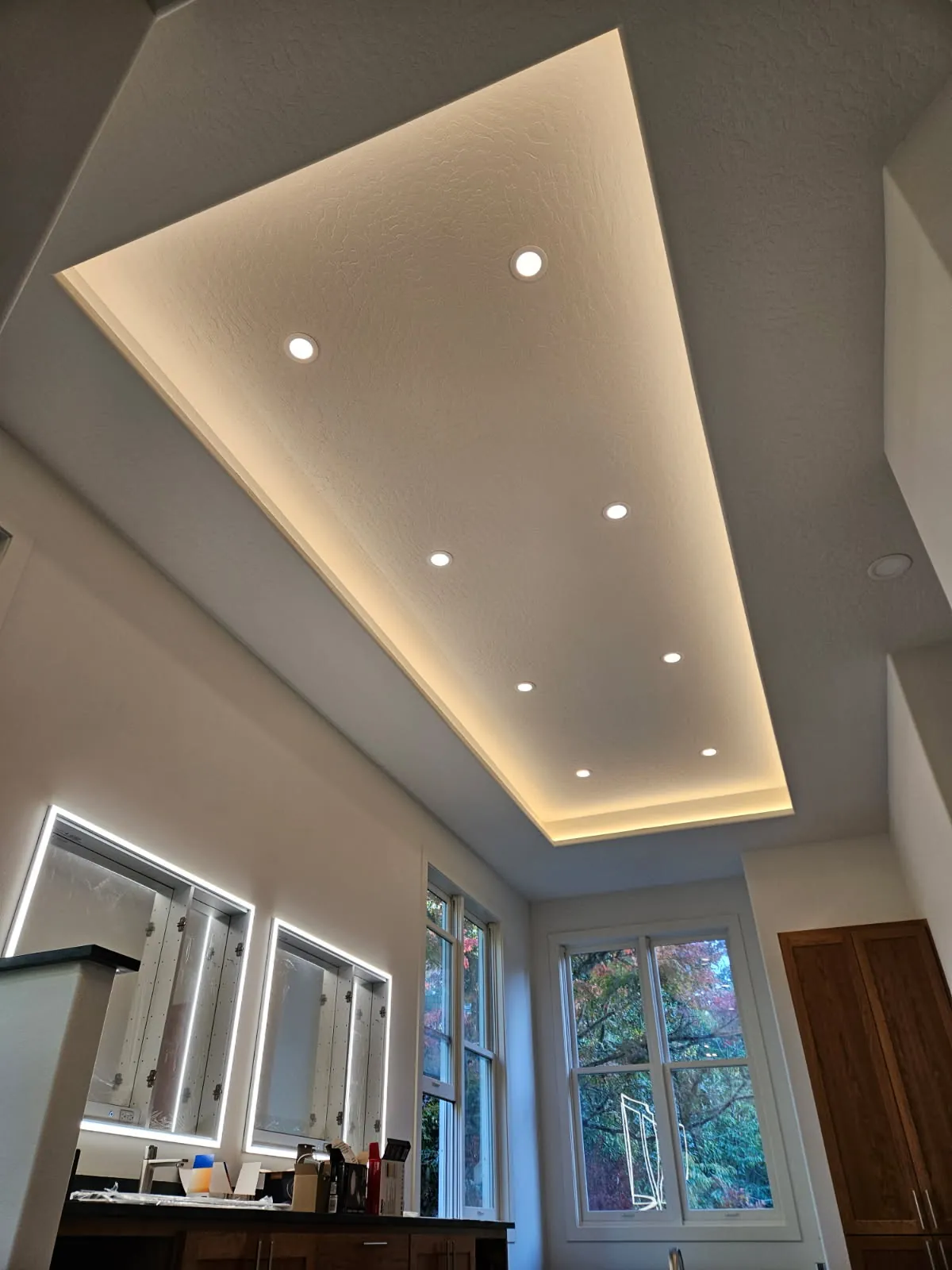
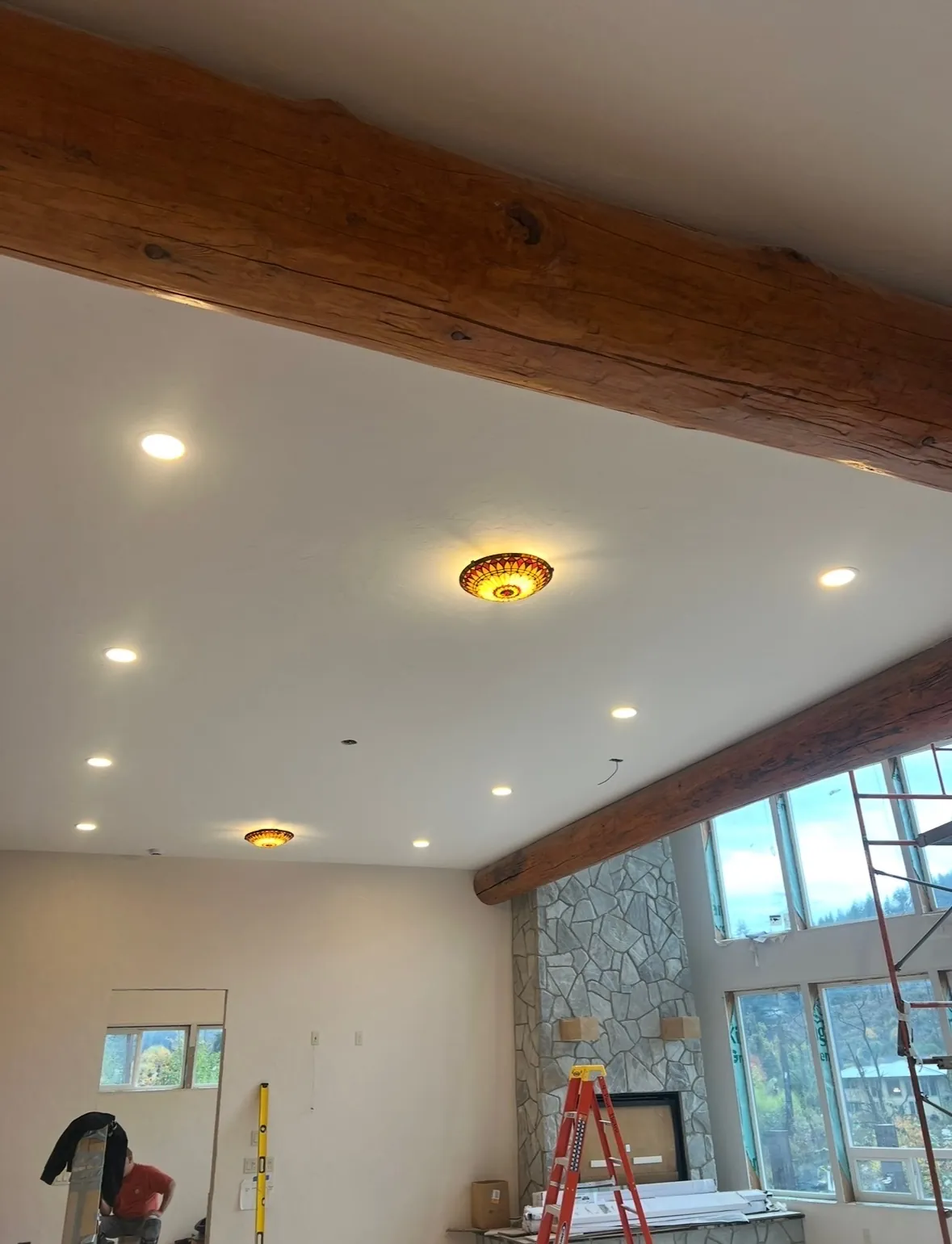
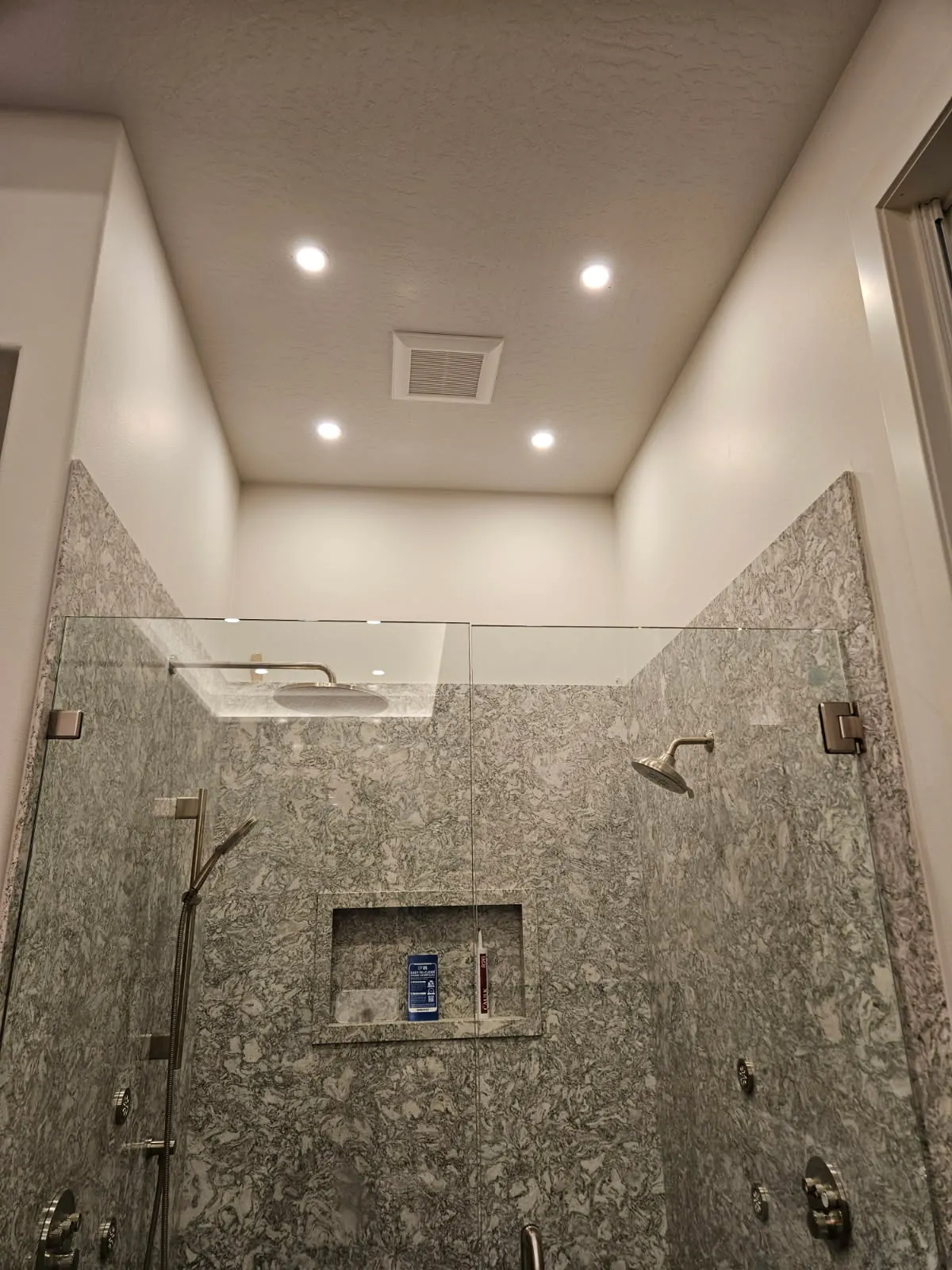
Laying out the lights
Good recessed lighting starts with where you'll stand and sit. In a kitchen, the lights go over the counters so you aren't working in your own shadow. In a living room, they wash the walls and light the seating, and dimmers let you turn them down at night. We settle the layout with you before we cut, so you know the spacing first.
Can recessed lights go into a finished ceiling?
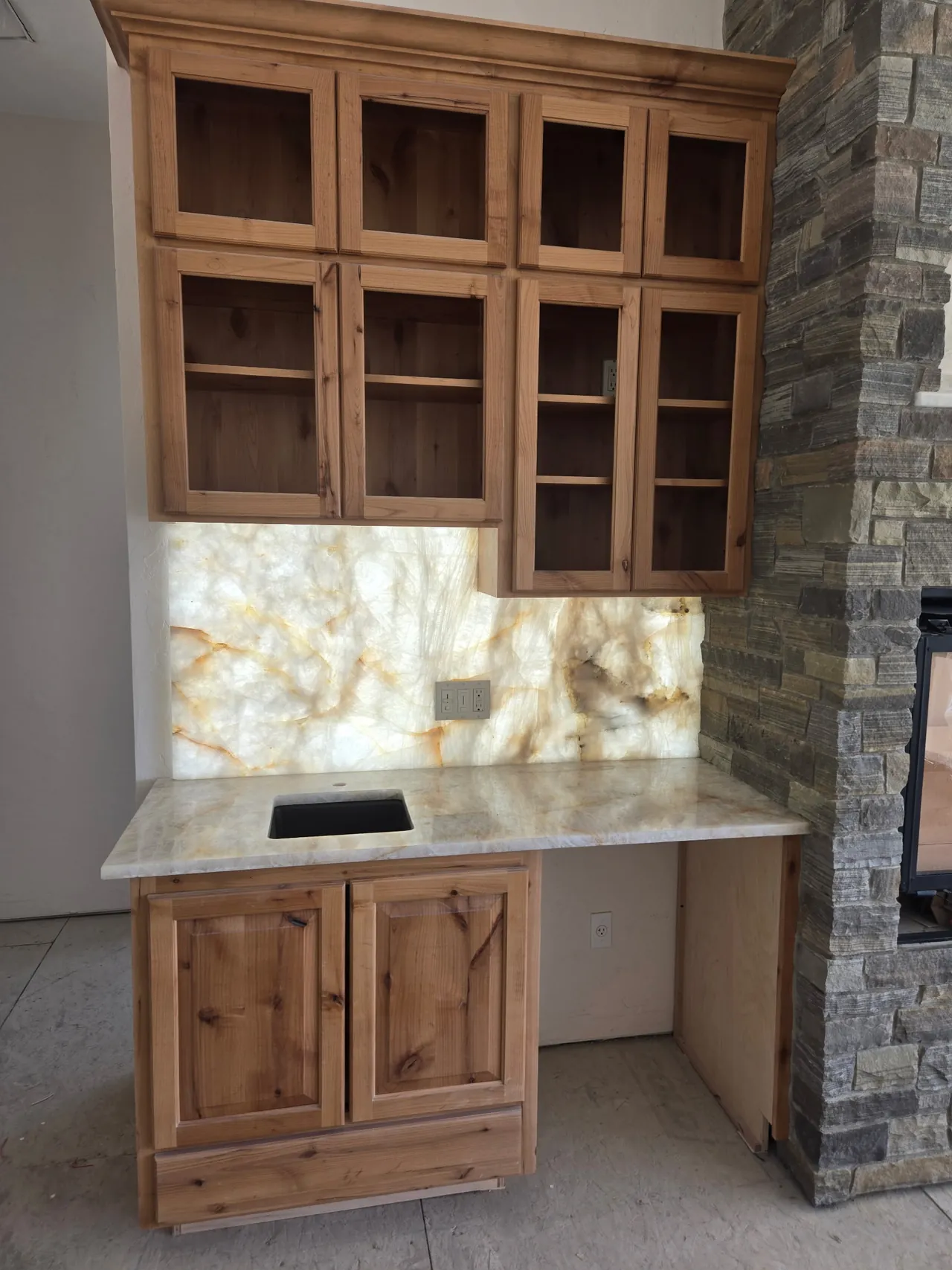
Yes. We pull wire from one light hole to the next and through the attic when there's access, and wafer lights help because each fixture's hole is all the opening it needs. Jesse did that for Dynamic Industries:
… Adding can lights you never know how many additional holes you’re going to get, but he managed to complete the project with adding only 3 holes. …
Lights under an insulated attic
When there's insulation above the ceiling, the fixture has to be rated to touch it. Those are labeled IC. Airtight fixtures also keep heated air from leaking up into the attic around each light, which matters in a house you're paying to heat all winter. Most wafer lights are rated for both, and we check the label on each one.
Dimmers and color
LED lights need a dimmer made for LED, or they can flicker or hum. We match the dimmer to the lights. Many wafer lights also let you pick the color of the light with a small switch on each fixture, from warm, like an old bulb, to cool white. Tell us what you like and we'll set them all the same.
… Their bid was reasonable and Jesse was able to get us in quickly for wafer light installation in 3 rooms and a fan replacement. The work was finished in less than a day and they left the work area as clean as when they arrived. …
We can also split the lights into groups on separate switches, like the counters on one and the island on another, so each part of the room can be lit on its own. Planning a remodel? Recessed lights go in easiest while the ceiling is open, so we plan them with the rest of the remodel wiring.